Piping System Delayed Failure Prognosis

Challenge

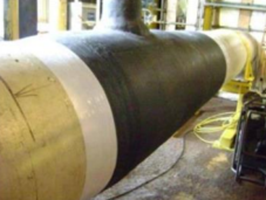
A platform in the North Sea belonging to a supermajor oil company recorded an incident where two Emergency Shutdown Valves (ESDs) on the HP flare header failed in closed position during operation, recording pressure in the region of 50barg. The HP flare header, which is ANS Class 150, should ordinarily be limited to circa 20barg for the given temperature.
The operator reported it to the UK-HSE, and the latter recommended that an Independent Verification Body be consulted for an objective review of the incident and its possible impact. The job was subcontracted to ZETA by Lloyds Register.

Our approach

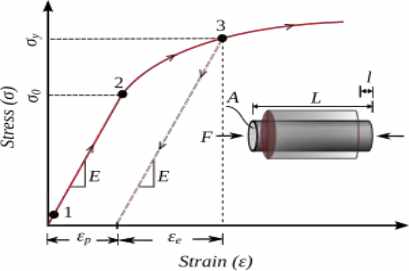
As groundwork was partly done, we focused on assessing if the carbon steel alloy—exposed to pressure beyond its rating—might fail due to residual stress and work hardening. Such failure often occurs later due to lattice structure dislocation.
Normally, we’d collect incident data, assess plastic deformation, measure residual stress (e.g. x-ray diffraction), evaluate material properties, conduct microstructural analysis, and run computer modelling.
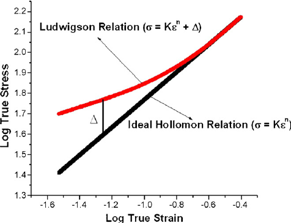
Due to constraints (timeline, location, cost), direct measurement wasn’t feasible. Instead, we used a combination of indirect methods: Finite Element Method (FEM) for numerical modelling of material and system behavior, and Hollomon’s equation for analytical evaluation. We also used Ludwik’s equation for scenarios involving prior deformation across multiple time steps.

Results

By evaluating plastic deformation, residual stresses, hardness changes, and microstructural alterations, we were able to determine the extent of the work hardening and residual stress, and their respective and combined impact on the material integrity. This enabled us to predict the likelihood of delayed failure which was the main concern.

Date:

Category:

Tags: